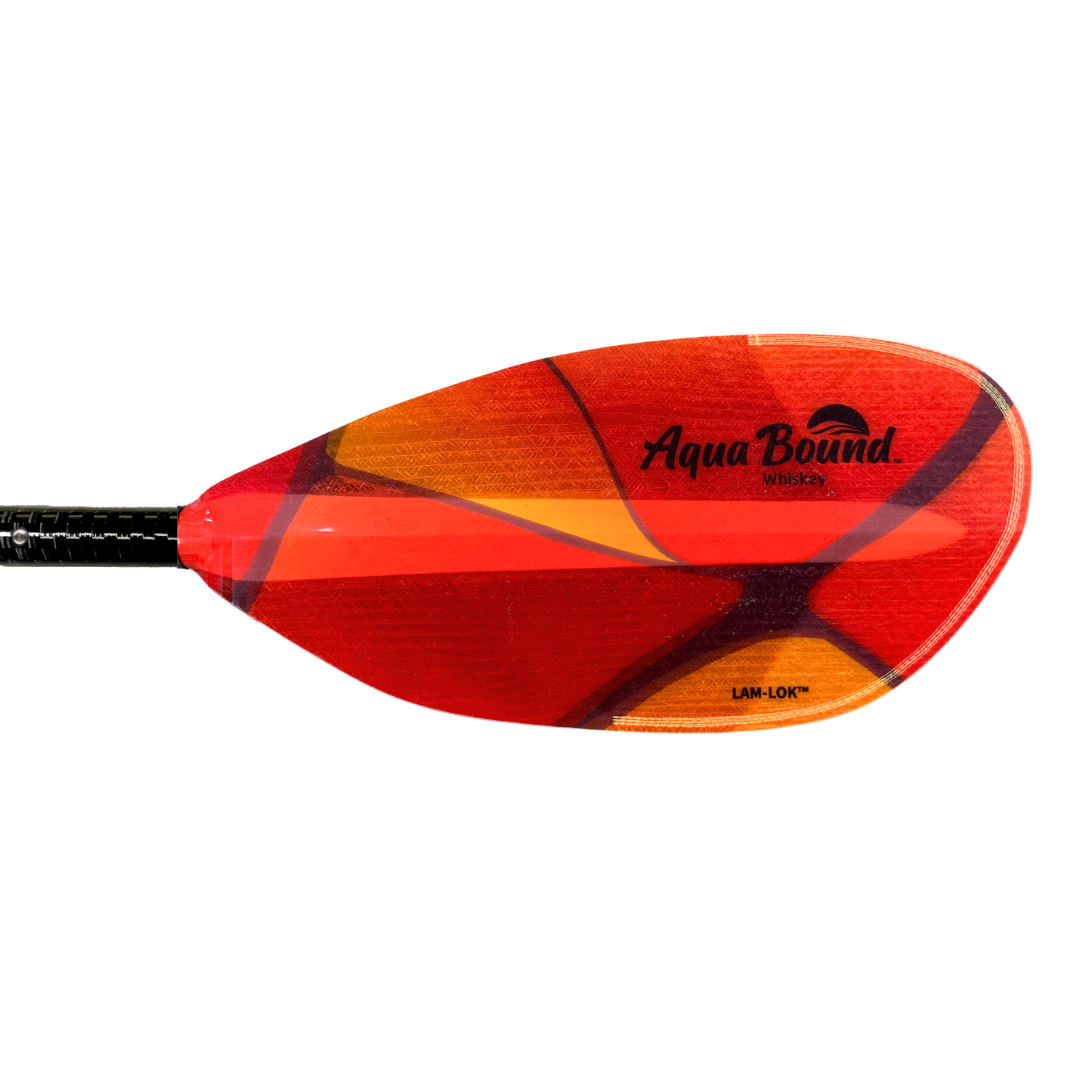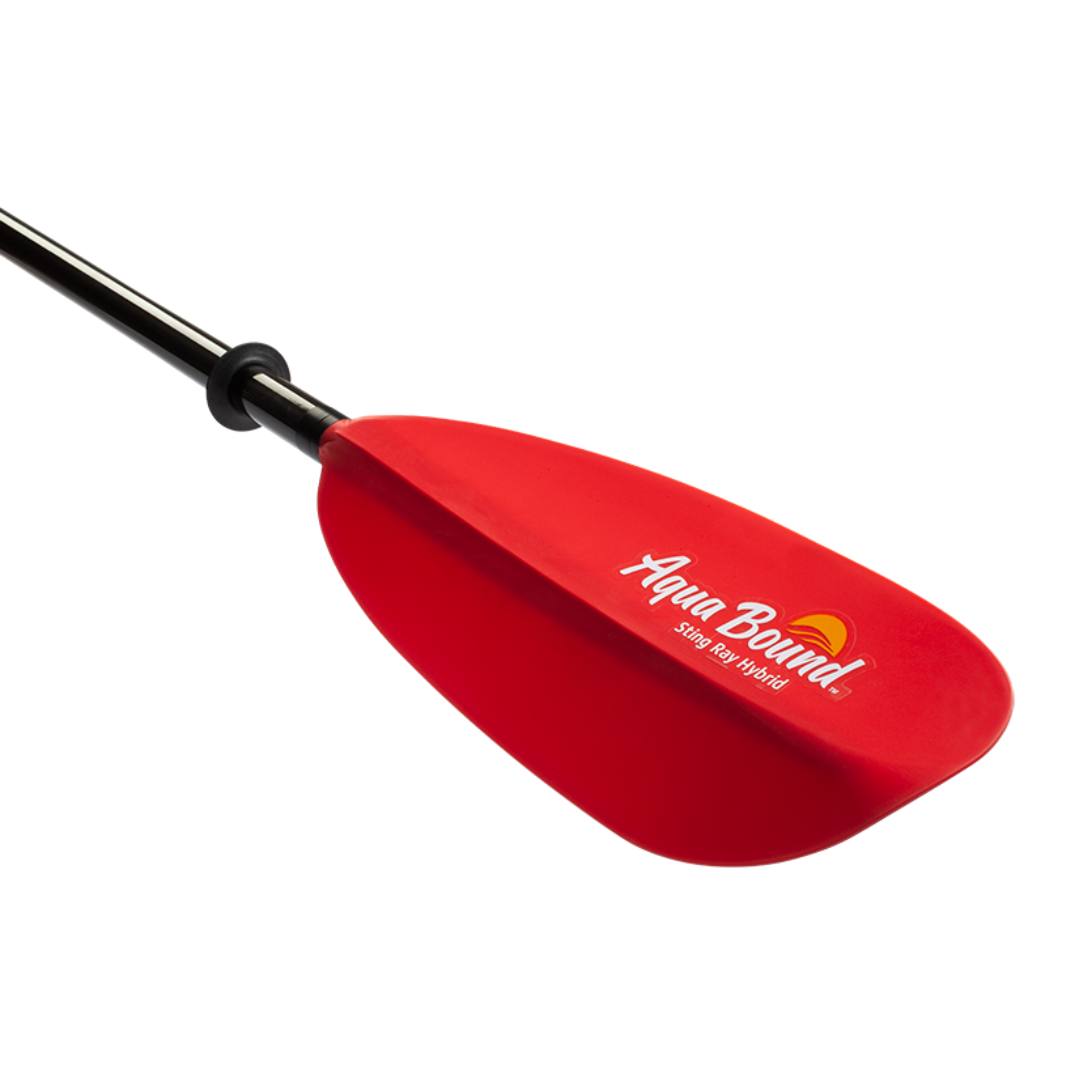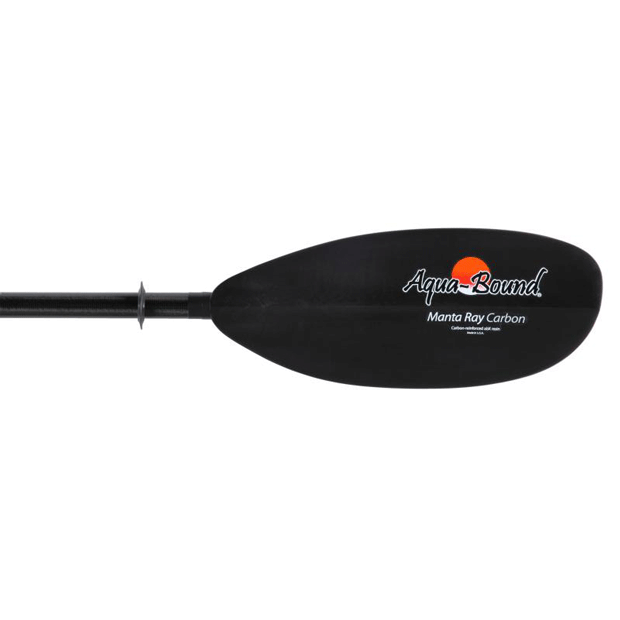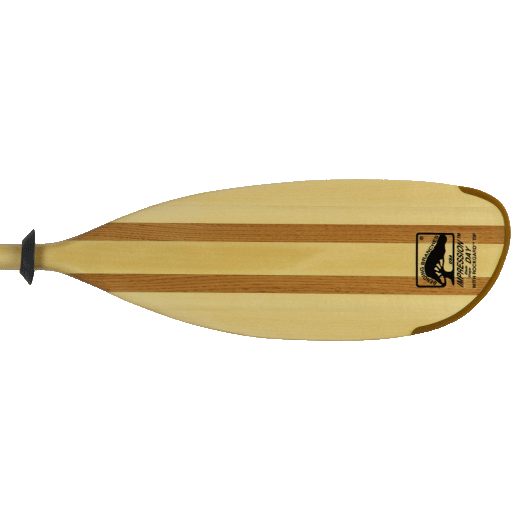
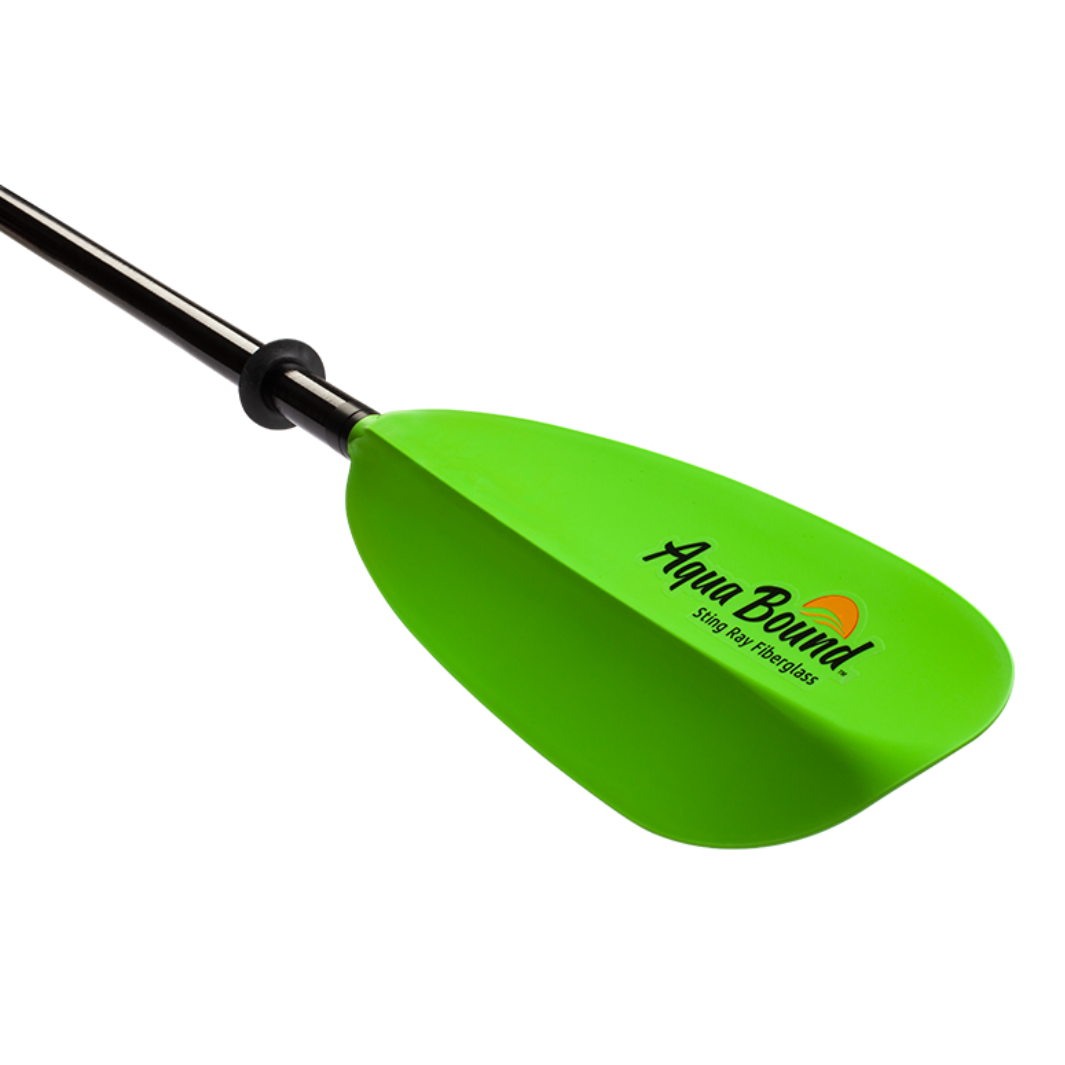
Sting Ray Fiberglass Shaft
The Sting Ray Fiberglass is the entry point into Aqua Bound's Sting Ray range, and it earns its place — the blade is exactly the same shape and area as the paddle costing ninety dollars more. What you give up is weight and ferrule.
Two Honest Caveats
At 33.5 ounces it is the heaviest of the three Sting Rays — four and three-quarter ounces more than the Carbon, which you will notice by the end of a long afternoon. And the snap-button ferrule gives you 0° and 60° feather only, not the infinite 15° adjustment of the Posi-Lok models. Neither is a fault at this price; both are worth knowing before you buy rather than after.
High-Angle or Low-Angle
This is the thing worth understanding before you spend anything on a paddle. A high-angle blade is short and wide: you paddle with your hands high and the blade enters close to the hull, almost vertical, like climbing a ladder. It takes a big bite and it is the choice for speed, for punching into wind, and for a heavy loaded boat. A low-angle blade is long and narrow: hands stay low, the shaft nearer horizontal, and the blade sweeps wider from the boat. It is less work per stroke, which is what you want when you are out for three hours watching birds rather than racing anybody.
Most people think they will paddle high-angle and then don't. For flat coastal water around Clearwater, low-angle is the right answer more often than not.
Sting Ray Fiberglass Details
• Blade: abXII fiberglass-reinforced nylon, 92.5 sq in (597 sq cm), 6.5" x 18"
• Shaft: fiberglass, ovalised where your hands go
• 33.5 oz (950 g)
• Lengths 200–260 cm in 5 cm steps
• Snap-button ferrule, 0° and 60° feather, left or right hand control
• 2-piece; 2 year manufacturing warranty
• Low-angle blade
We have it in 220, 230 and 240 cm, in Orange, Electric Green and Sunset Red. This is also the sensible choice for a spare paddle strapped to the deck. Come and compare it against the Hybrid at our Clearwater shop — forty dollars is the best-spent money in the range.